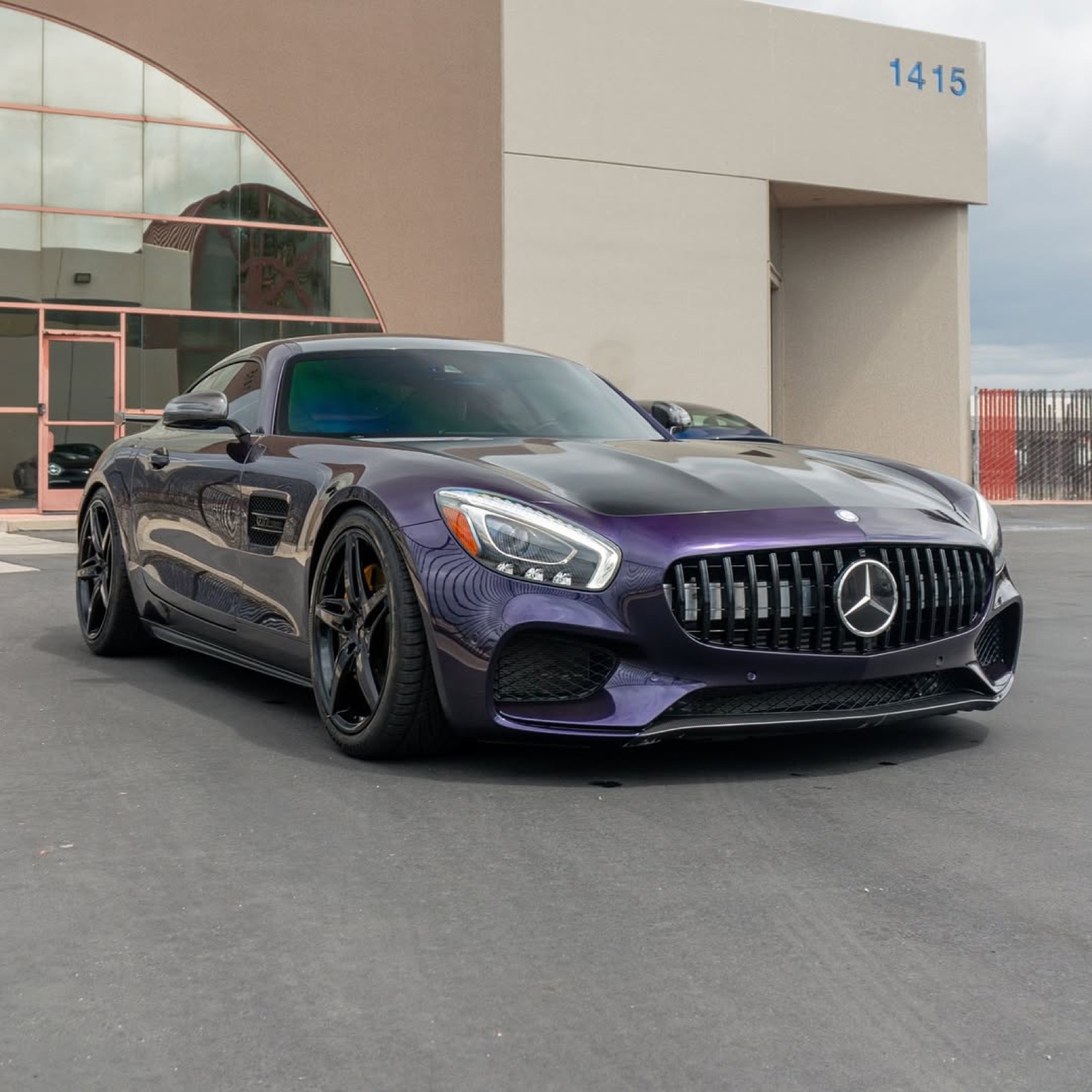
Short answer: they do two different jobs — and the best-protected exotics in Orange County wear both. PPF takes the hits; ceramic makes it glow and keeps it clean.
Paint protection film (PPF) and ceramic coating are the two most talked-about ways to protect a vehicle's finish, and they're constantly mistaken for each other. They aren't competitors. They solve different problems — and understanding the difference is how you spend your money where it actually matters.
What PPF actually does
Paint protection film is a thick, clear, self-healing urethane layer applied directly over your paint — a transparent, flexible armor. Its job is impact protection: rock chips, road rash, sand, bug acid and light scratches. Because the film has real thickness, it absorbs energy before it ever reaches your clear coat. Quality film is self-healing, so minor swirls and scratches vanish with heat from the sun or warm water.
What PPF is not built for is being the easiest thing in the world to clean — that's where ceramic comes in.
What ceramic coating actually does
A ceramic coating is a liquid nano-coating that chemically bonds to your paint (or to PPF) and cures into a hard, glassy layer. Its job is gloss and hydrophobics: it deepens shine, makes water and dirt bead and roll off, and resists UV, oxidation, bird droppings and chemical stains. It adds scratch resistance — but it is not impact protection. A rock at 70 mph will still chip paint under a ceramic-only car.
PPF vs ceramic, side by side
| PPF | Ceramic | |
|---|---|---|
| Protects against | Rock chips, scratches, road rash | UV, stains, water spots, light marring |
| Self-healing | Yes | No |
| Gloss boost | Subtle | Significant |
| Easy cleaning | Good | Excellent (hydrophobic) |
| Typical lifespan | Up to 10 years | 2–9 years by package |
So do you need both?
For a daily-driven or canyon-run exotic, yes — and that's exactly why we offer the Ultimate Protection package. The film goes on first to take impacts; the coating goes over the top for gloss and effortless cleaning. You get armor underneath and a mirror finish above.
Film first, ceramic on top — impact protection underneath, a slick self-cleaning shine on the surface.
If your car lives in a garage and rarely sees highway miles, you might start with ceramic coating alone for the look and easy upkeep. If you rack up freeway and canyon miles around Orange County, lead with paint protection film on the high-impact panels — at minimum a full front.
How we'd approach it
Every build starts with an honest assessment of how you drive and store the car. From there we recommend full-front or full-body PPF, the right ceramic tier, or the full combo. No upselling for the sake of it — just the right protection for your vehicle.